Qunotz Font for Web Design
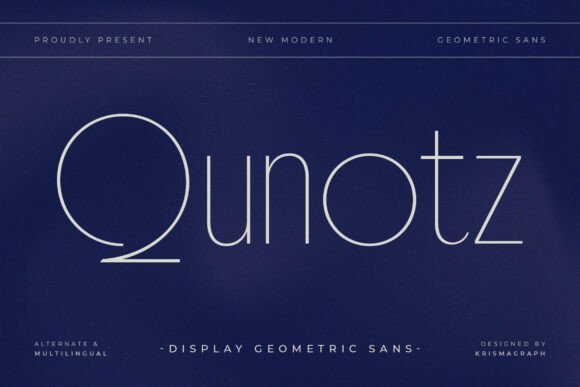
As a web designer, I often find myself searching for the perfect typeface that can elevate a project without overwhelming it. Recently, I tested Qunotz in a hero section of a boutique online store, and its clean, modern aesthetic immediately caught my eye. Built on pure circular geometry, Qunotz is a precision-crafted ultra-thin geometric display sans that turns negative space into a design statement. Its hairline strokes and expansive open counters give it a refined, almost futuristic feel that works well in digital layouts.
Qunotz for E-commerce Branding and Product Pages
When working on an e-commerce site, I needed a font that could stand out while maintaining readability across different screen sizes. Qunotz proved to be an excellent choice for product page headings and brand logos. The font’s minimal weight and balanced proportions make it ideal for creating a sleek, professional look that doesn’t distract from the content. It pairs well with bold, contrasting colors, making it perfect for call-to-action buttons and promotional banners.
One of the standout features of Qunotz is how it handles negative space. Its open counters allow for better visual breathing room, which is especially important when designing for mobile users. On smaller screens, the font remains legible and doesn’t feel cramped, even when used in short phrases or as part of a logo.
Qunotz in Digital Ads and Social Media Graphics
For a recent social media campaign, I used Qunotz as the primary font for ad headlines and graphic overlays. The font’s geometric structure gave the visuals a modern edge that aligned with the brand’s identity. Its thin strokes work well against dark backgrounds, where it doesn’t get lost in the contrast. I found that using it at larger sizes made the text pop without sacrificing clarity.
When paired with a more robust sans serif for body copy, Qunotz adds a touch of elegance that elevates the overall design. This pairing also helps maintain visual hierarchy, ensuring that the most important information stands out without overwhelming the viewer.
Qunotz for Creative Portfolios and Coaching Websites
On a coaching website, I experimented with Qunotz for the homepage header and service titles. The font’s clean lines and subtle curves gave the site a polished, trustworthy appearance that matched the brand’s tone. It worked particularly well in sections where the background was a simple solid color or a soft gradient, allowing the text to remain the focal point.
I also used Qunotz for a portfolio landing page, where it served as the main title and subheadings. The font’s balance between simplicity and sophistication helped convey a sense of professionalism, which is crucial for a creative business. It didn’t feel too flashy, but it still had enough character to make the design feel unique.
Qunotz in Responsive Layouts and Mobile Design
Testing Qunotz on mobile devices revealed its strength in responsive design. Even at smaller sizes, the font maintained its clarity and didn’t become too faint or hard to read. I found that using it for navigation menus and button labels worked well, as it added a touch of refinement without being too delicate.
One challenge I encountered was using Qunotz on image overlays. While it looked great against light backgrounds, it sometimes struggled to stand out against darker or textured images. To solve this, I adjusted the font size and added a slight white stroke to the text, which improved visibility without compromising the design.
Qunotz for Blog Headers and Editorial Design
For a blog redesign, I used Qunotz as the heading font for article titles and section dividers. Its geometric form gave the layout a modern, editorial feel that felt fresh and contemporary. I paired it with a more traditional serif font for body text, which created a nice contrast and helped guide the reader through the content.
Readability was a key concern, especially since the blog had a lot of long-form content. Qunotz performed well in shorter paragraphs and headlines, but I found that it wasn’t the best choice for extended reading. For body text, I switched to a more readable sans serif, which allowed the audience to engage with the content more comfortably.
Qunotz for Logo Design and Brand Identity
When designing a logo for a new startup, I considered Qunotz as a potential option. Its clean, minimalist style made it ideal for a tech or creative brand looking to communicate innovation and simplicity. The font’s symmetry and geometric structure gave the logo a strong visual presence that translated well across different mediums, from websites to print materials.
However, I also explored alternative weights and styles to ensure the font could adapt to different branding needs. Qunotz’s versatility made it a good fit for both bold, eye-catching logos and more subdued, elegant typography in corporate settings.
Qunotz for Landing Pages and Conversion-Focused Design
In a course sales page, I used Qunotz for the headline and key benefits section. The font’s clean, modern look helped create a sense of trust and professionalism, which is essential for conversion-focused designs. It worked well with bold, high-contrast colors, making the message clear and easy to scan.
One thing I noticed was that Qunotz didn’t always perform well in very small sizes, such as on buttons or footnotes. In those cases, I switched to a slightly bolder weight or a different font altogether to maintain readability. But for larger, more prominent text, Qunotz was a reliable choice that added visual interest without compromising usability.