Grimoire Modern Font Review
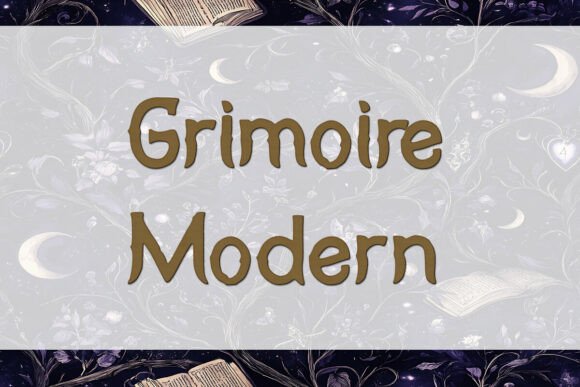
There I was, staring at a blank brand board, trying to find the right visual language for a boutique skincare line with a mystical edge. The client wanted something that felt timeless but modern, elegant yet mysterious. That’s when I reached for Grimoire Modern—a high-contrast serif typeface designed for the Modern Witch aesthetic. It struck a delicate balance between sharp, thorn-like serifs and soft, elegant curves—much like a vintage spellbook opened in a candlelit room.
Grimoire Modern for Logo Design and Brand Identity
As a serif font, Grimoire Modern immediately brought a sense of sophistication and storytelling to the table. I tested it on a logo concept, and it worked beautifully as a headline font. Its bold strokes and intricate details made it feel like a signature, perfect for a brand that wants to stand out without being too flashy. When paired with a minimalist sans serif for subheadings, it created a nice contrast that kept the design from feeling too heavy.
The font’s personality is both refined and whimsical, which makes it ideal for brands targeting a niche audience that values artistry and individuality. Whether it's a handmade soap company or a wellness retreat, Grimoire Modern adds a touch of old-world charm without sacrificing modernity.
Grimoire Modern for Packaging and Product Labels
I tried Grimoire Modern on a packaging mockup for a small-batch candle line. The font’s high contrast and ornate details made it pop against matte paper stock, giving the product an air of exclusivity. It looked especially striking on a label with a dark background, where the white space around the letters really emphasized the elegance of the typeface.
However, I noticed that in smaller sizes—like on a product tag or a price sticker—the details could get lost. That’s something to keep in mind if you’re using it for more functional elements of a brand. For those cases, a simpler font might be better suited.
Grimoire Modern for Web Design and Social Media Graphics
When I used Grimoire Modern on a website header, it added a dramatic flair that worked well for a creative studio’s homepage. The font’s strong visual presence made it perfect for hero sections, especially when paired with a dark background and bold color accents. On social media layouts, it caught the eye and helped create a cohesive look across posts and stories.
But again, readability became a concern when the font was used in longer text blocks. As a display font, it shines best in headlines, banners, and short phrases. For body text, it’s better to pair it with a more legible typeface.
Grimoire Modern for Business Cards and Print Assets
A business card with Grimoire Modern as the main text felt instantly professional and memorable. The font’s unique structure gave it a custom feel, making it ideal for independent designers, artists, or small businesses looking to make a statement. I even used it on a flyer for a local event, where it stood out among other more standard fonts.
One thing to note is that Grimoire Modern may not be the best choice for very dense print projects, such as brochures or long-form editorial pieces. Its complexity can make it harder to read in large quantities, so it’s best reserved for focal points rather than full-page text.
Grimoire Modern for Creative Projects and Brand Consistency
In a branding project for a new artisanal bakery, I found that Grimoire Modern worked well as a logo font, especially when combined with a clean, geometric sans serif for supporting text. The contrast between the two fonts created a balanced and professional look that felt both modern and nostalgic.
It also held up well in different formats—whether on a website, social media, or printed materials. The font’s versatility allowed me to maintain a consistent visual identity across platforms, which is crucial for building brand recognition.
For those considering Grimoire Modern, I recommend testing it in your specific use case before finalizing any designs. Try it on different backgrounds, sizes, and mediums to see how it performs. And don’t forget to check the commercial licensing terms if you're using it for client work or commercial products.