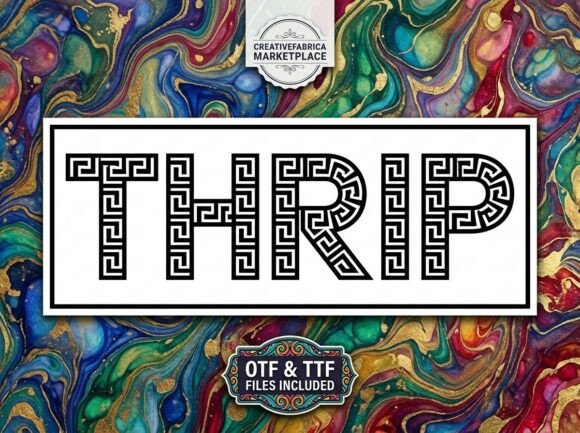
Thrip: A Decorative Font for Creative Projects
There I was, staring at a blank brand board, trying to find the right visual voice for a new artisanal café. The client wanted something that felt handcrafted, a bit whimsical, but still professional. I had a few fonts in mind, but nothing quite clicked until I tried Thrip. It wasn’t just about the look—it was about the feeling it brought to the table.
Thrip for Logo Design and Brand Identity
Thrip is a decorative display font that commands attention without shouting. Its unique brush-like strokes and fluid curves give it an artistic flair that feels both modern and timeless. When I first tested it on a logo concept, I was struck by how well it balanced creativity with clarity. It’s not a font you’d use for body text, but as a headline or logo font, it shines.
For a brand identity project, Thrip can be the anchor of your visual language. It works best when paired with simpler typefaces to create contrast. I found that pairing it with a clean sans serif like Helvetica or Montserrat helped keep the design from feeling too busy. The result was a logo that felt fresh, yet grounded.
Thrip for Packaging Design and Product Labels
When I moved to packaging mockups, Thrip really started to show its strengths. On a coffee bag, it added a sense of authenticity and craftsmanship. The font’s organic shape made it feel like it was hand-painted, which fit perfectly with the café’s aesthetic. It worked especially well on product labels, where it could stand out without overwhelming the design.
I also tested it on a small business card. At a glance, it made the card feel more personal and memorable. But there were some limitations. In smaller sizes, the details got lost, and the font became harder to read. That’s why I recommend using Thrip for larger text elements—headlines, titles, or signage—where its personality can really come through.
Thrip for Web Design and Social Media Graphics
In web design, Thrip excelled as a hero header or a call-to-action button. It added a touch of elegance to a homepage without being too flashy. On social media, it worked great for Instagram posts or Facebook banners, where bold, eye-catching text is key. I noticed that it held up well on digital screens, though I did adjust the spacing slightly to ensure readability.
One thing to keep in mind is that Thrip isn’t ideal for long paragraphs. If you’re designing a website with a lot of text, it’s better to use a more legible font for the body. But as a decorative font, it can add visual interest to headers, section titles, or feature boxes.
Thrip for Editorial Design and Print Assets
When I used Thrip on a magazine layout, it brought a sense of movement and energy to the page. It worked well as a subheading or a pull quote, giving the design a dynamic feel. In print, it maintained its character, though I had to make sure the resolution was high enough to preserve the fine details.
For posters and flyers, Thrip was a strong choice. It gave the design a cohesive, artistic look that stood out in a crowded space. However, I found that it didn’t work as well for multi-line text. Short phrases or single words were the way to go if you wanted to maintain legibility and impact.
Thrip for Handmade and Artisanal Brands
Thrip is perfect for brands that want to convey a handmade or artisanal vibe. Whether it’s a boutique, a skincare line, or a local bakery, the font adds a touch of personality that feels authentic. It’s not the kind of font you’d use for a corporate logo, but for creative or lifestyle brands, it can be a powerful tool.
One of the things I appreciated most about Thrip was its versatility. It could be used in a variety of contexts, from a simple sign to a complex brand system. As long as it was used intentionally, it never felt out of place.
Before finalizing any design with Thrip, I always recommend testing it in different sizes and formats. Make sure it looks good on both digital and print assets. Also, check the licensing terms to ensure it’s suitable for commercial use, especially if you’re working on a client project.